This checklist covers what to look for before ordering mad honey into any EU country.
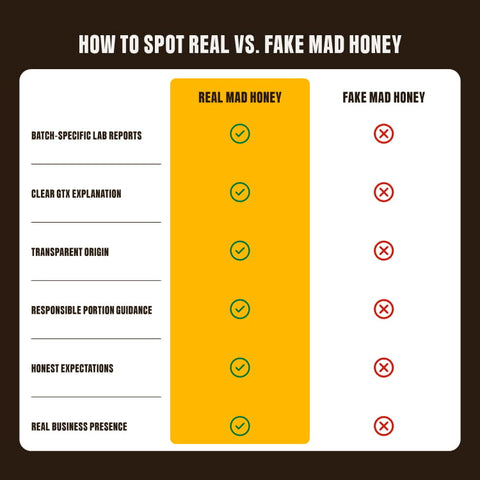
Look for three things: a named origin, a published lab report for the batch on sale showing its grayanotoxin content, and a clear maximum serving.
What to Check Before Buying Mad Honey in the EU
Buying mad honey across EU borders comes with a few extra variables compared to a domestic purchase, so check any seller on the following:
- Named origin – a specific harvest region, not a vague "Himalayan" claim.
- Batch lab report – a published report for the batch on sale, showing its grayanotoxin content.
- Clear maximum serving – one fixed limit on the jar and on the website.
- Delivery within the EU – shipping from inside the EU avoids customs delays and import charges.
Sourcing transparency matters when choosing a seller: one that's upfront about origin, batch testing and grayanotoxin content is easier to trust than one leaning on vague claims, whichever EU country you're ordering into.
How Much Per Day, and Who Should Avoid It
Maximum serving: Up to 5 g a day – less than one level teaspoon, for adults only.
Too much: Eating more than 5 g a day can cause dizziness, nausea, cold sweats and low blood pressure. If that happens, stop, drink water and rest; if symptoms are severe, call 112 or see a doctor.
Who shouldn't use it: Not recommended for children, during pregnancy or breastfeeding, for people with heart or blood pressure conditions, or if allergic to honey. Taking medication? Ask your doctor first.
Frequently Asked Questions
Where does mad honey come from?
It's traditionally harvested in Nepal and Turkey's Black Sea region.
How much mad honey per day?
Up to 5 g a day – less than one level teaspoon, for adults only.
Does mad honey expire?
Raw honey, including mad honey, doesn't spoil in the traditional sense if stored properly, though its flavour and texture can change over time.
What does mad honey taste like?
Mad honey typically has a darker colour and a more bitter, earthy taste than standard honey, with a slight burning finish on the tongue that regular honey doesn't have.