Key Takeaways
- Store mad honey at room temperature in a cool, dark, dry place, with the lid tightly closed.
- The fridge isn't needed and makes honey crystallise faster.
- Crystallisation is a natural change in raw honey. Nepali mad honey tends to set sooner than Turkish deli bal.
- Colour and texture vary from jar to jar because batches aren't blended, so a new jar may look different from your last one.
Your jar of mad honey might turn cloudy or solid after a few weeks. A new jar might arrive noticeably darker or lighter than the one before. And there's a date on the label that's easy to misread.
Almost all of this is normal. Raw honey is a natural product that goes through changes after it's harvested, and mad honey is no exception. This guide covers where to keep your jar, why it crystallises, why colour varies, and what the best-before date actually tells you.
How Should You Store the Mad Honey?
Store the mad honey at room temperature in a cool, dark, dry place, such as a kitchen cupboard or pantry. Keep the lid tightly closed and use a clean, dry spoon each time. There's no need to refrigerate it, since cold temperatures make honey crystallise faster.
Where to Keep Your Jar of Mad Honey
Here is how to best take care of your mad honey.
A Cool, Dark Cupboard
The ideal spot is somewhere with a steady temperature and no direct light. A cupboard or pantry away from the hob, the oven and the dishwasher works well. Avoid windowsills and open shelves that catch the sun, since warmth and light gradually change honey's colour and flavour.
Keeping Moisture Out
Moisture is what honey handles worst. Close the lid firmly after every use, and only reach into the jar with a clean, dry spoon. A damp spoon, or one with crumbs on it, can introduce water and food particles that change the honey over time. A dedicated spoon makes this easy.
Crystallisation: Why Mad Honey Sets
Sooner or later, most jars of mad honey turn cloudy or solid. But is that something you should worry about?
Why Raw Honey Crystallises
Honey is a concentrated mix of natural sugars, mainly glucose and fructose. Over time, the glucose can form tiny crystals, turning the honey cloudy, thicker, and eventually solid. It happens faster in cold environments and in honeys that contain more glucose.
Crystallisation doesn't mean the honey has gone off. It's a natural process in raw honey, and the flavour stays the same. Crystallised honey usually looks paler and is grainier on the spoon, but it's the same honey.

Nepali vs Turkish Mad Honey
The two types behave a little differently in the jar. Nepali mad honey is thick and tends to crystallise faster. Turkish deli bal is looser, pours more freely, and usually stays runny for longer.
Both are normal. If your Nepali jar sets and your Turkish jar doesn't, that's simply a difference between the two honeys.
Why Colour and Texture Vary From Jar to Jar
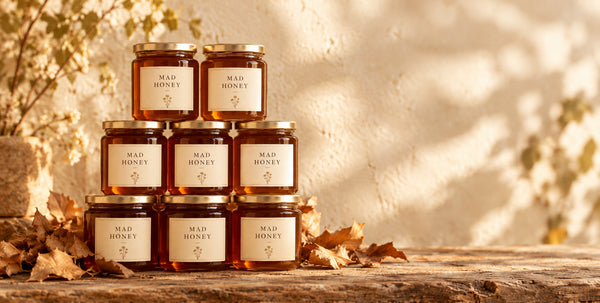
If you've bought mad honey more than once, you may have noticed that no two jars look exactly alike. There are a few natural reasons for that.
- Batches aren't blended: Each jar comes from a single batch, so it reflects that harvest rather than an average of several.
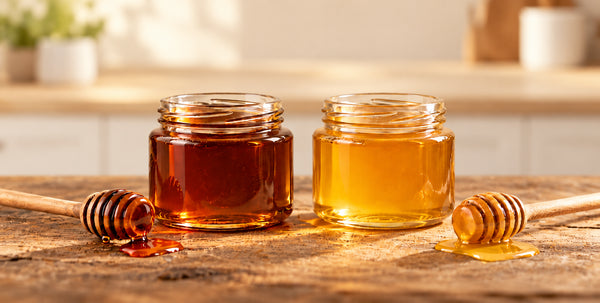
- Origin: Nepali batches are often darker, from deep amber to reddish brown, while Turkish batches tend to be lighter, from pale gold to light amber.
- Season and flowers: The rhododendron species the bees visit, and the conditions in a given year, shift the colour and flavour of each harvest.
- Crystallisation: A jar that has started to set looks paler and cloudier than the same honey in liquid form.
- Time: Like most honey, mad honey can darken slowly as it ages, especially if it's kept somewhere warm.
None of these changes mean anything is wrong with the honey. They're part of what makes each batch its own.
Shelf Life and the Best-Before Date
Honey is naturally stable. Its high sugar content and low moisture leave little room for anything to grow, which is why honey keeps far longer than most foods.
Each jar of mad honey still carries a best-before date. That date marks the period when the honey is at its peak for flavour and quality, not a cut-off point after which it suddenly changes. How you store the jar matters more than how old it is: a well-sealed jar kept in a cool, dark cupboard will hold its colour and flavour much better than one left near the hob.
When a Jar Isn't Right
Spoilt honey is rare, and when it happens, moisture is almost always the reason. Look out for:
- A sour, fermented, or alcohol-like smell
- Foam or bubbles on the surface
- A thin, watery layer separating on top
- Visible mould
If you notice any of the signs above, don't use the honey.
Final Thoughts
Mad honey needs very little looking after. A cool, dark cupboard, a tightly closed lid and a dry spoon cover almost everything. The fridge isn't needed and only makes the honey set sooner.
Crystallisation is natural, and it happens more quickly in Nepali mad honey than in Turkish deli bal. Differences in colour and texture between jars come from unblended batches, origin and season, not from anything going wrong. Keep the jar well sealed and away from heat, and it will keep its colour and flavour right up to the date on the label.
Label information
Never more than 5 g a day – less than one level teaspoon, for adults only.
Eating more than 5 g a day can cause dizziness, nausea, cold sweats and low blood pressure. If that happens, stop, drink water and rest; if symptoms are severe, call 112 or see a doctor. Not recommended for children, during pregnancy or breastfeeding, for people with heart or blood pressure conditions, or if allergic to honey. Taking medication? Ask your doctor first.