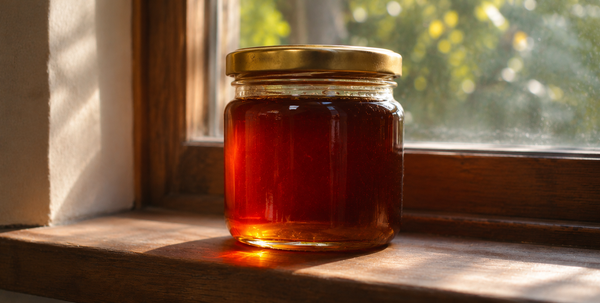
- Raw honey is strained coarsely and goes into the jar without being heated.
- Regular honey is usually warmed and finely filtered to stay clear and runny.
- Raw honey crystallises sooner and varies from one batch to the next.
- Mad honey is a raw honey with a single floral source: rhododendron nectar.
For most people, honey means a clear golden liquid in a squeezy bottle that pours the same way every time. Open a jar of raw honey, and you may be surprised by something cloudier and thicker. Bees make both, but what separates them is what happens on the way to the jar.
Let’s look at both through processing and compare how they look, set, and taste, with mad honey as an example of raw honey.
What Makes Honey Raw?
Raw honey is honey that has been taken from the comb, strained through a mesh to catch pieces of wax and other bits from the hive, and put into jars without being heated or finely filtered. Regular honey, the kind sold in most supermarkets, usually goes through extra steps: it's warmed so it flows easily, pushed through fine filters for a clear look, and often blended from several sources so every jar tastes the same. Those steps change the texture, the look and how quickly the honey sets, which is why the two can seem like different products.
How Regular Honey Is Processed
Large honey packers handle tonnes of honey from many beekeepers, and they need it to look and pour the same in every jar. They usually achieve it in three steps.
1. Heating Regular Honey
Cold honey is thick, so packers warm it to make pumping, filtering and bottling easier. Many also heat it to a higher temperature for a short time to pasteurise it. This melts any sugar crystals that have started to form and slows crystallisation once the honey is on the shelf, so it stays runny for longer. Heat can also flatten some of the honey’s more delicate aromas.
2. Fine Filtering of Regular Honey
After warming, packers push the honey through very fine filters under pressure. This removes the tiny particles, including pollen grains, specks of wax and small air bubbles. The result is clear, glossy honey, with nothing floating in it.
3. Blending Honey From Several Sources
Supermarket honey is often a blend of honeys from different floral sources and regions. Blending hides differences between harvests, so a brand's honey looks and tastes the same from one year to the next. The label may name a mix of origins or simply describe the honey by colour or texture.
What Stays in Raw Honey After Straining
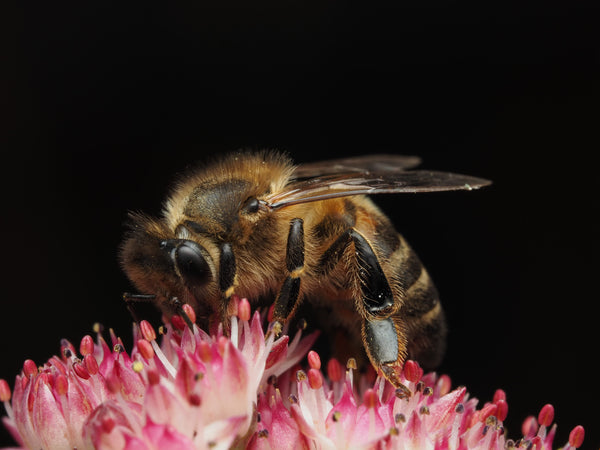
Straining through a mesh catches the larger pieces, like bits of comb and wax, but lets smaller particles through. Raw honey keeps pollen grains from the flowers the bees visited, fine specks of wax and tiny air bubbles trapped during extraction.
These particles are why raw honey often looks cloudy or slightly opaque and why a thin pale layer can form on top of the jar. That layer is mostly air bubbles and wax that have risen to the surface. It's a normal part of raw honey, and you can stir it back or skim it off if you’d like.
Raw Honey vs Regular Honey Crystallisation
Honey is a very concentrated mix of sugars, mainly fructose and glucose. Over time, the glucose separates and forms small crystals, which turn liquid honey into a thicker, grainy or creamy texture. This is crystallisation, and it's a natural process, not a sign that honey has gone off.
Raw honey usually crystallises sooner than regular honey, for two reasons. The pollen and wax particles left in it give crystals something to form around. Because raw honey hasn’t been heated, any tiny crystals already in it are still there to start the process. How fast it sets also depends on the flowers: honeys with more glucose, such as rapeseed honey, can set within weeks, while acacia honey can stay liquid for a long time.
Cool rooms speed crystallisation up, so a jar kept in a chilly pantry or the fridge will set sooner.
To soften a set jar, stand it in a bowl of warm water and stir now and then, keeping the water below 40 °C so the honey stays raw.
How Raw and Regular Honey Differ in Colour and Taste
The flowers the bees visit decide most of a honey's colour and flavour. Acacia honey is pale and delicate, while chestnut, heather and buckwheat honeys are dark, with deeper, more bitter or malty notes. This is true of raw and regular honey alike.
The difference comes from processing. Regular honey is blended to taste the same in every jar, so it usually lands somewhere in the middle: sweet, light and familiar.
Raw honey from one floral source keeps the flowers' character, and it can shift from season to season and batch to batch as the weather and the bloom change. Because raw honey hasn't been heated, its aroma also tends to come through more clearly when you open the jar.
Raw Honey vs Regular Honey at a Glance
Here is how raw honey and regular honey compare.
| Raw honey | Regular honey | |
|---|---|---|
| Processing | Extracted from the comb and strained | Warmed, finely filtered and often blended |
| Heating | Not heated during processing | Usually warmed, often heated briefly to a higher temperature |
| Filtering | Coarse mesh only | Fine filters under pressure |
| Appearance | Often cloudy or slightly opaque | Clear and glossy |
| Texture | Thicker, sometimes grainy or creamy | Runny and smooth |
| Crystallisation | Sets sooner | Stays liquid for longer |
| Taste | Shows the character of its floral source | Uniform |
| Batch to batch | Varies with season and bloom | Kept consistent by blending |
Mad Honey as an Example of Raw Honey
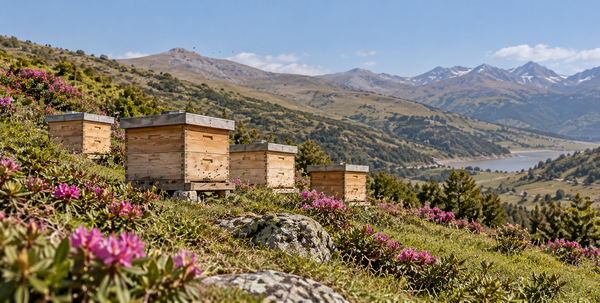
Mad honey shows what raw honey from one floral source looks like. It's made from the nectar of certain rhododendron species and comes from two regions.
In Nepal, honey hunters climb rope ladders to cut combs from the cliff nests of the Himalayan giant honey bee, then strain the honey from the comb. In Turkey, beekeepers on the eastern Black Sea coast collect deli bal from managed hives of European honey bees.
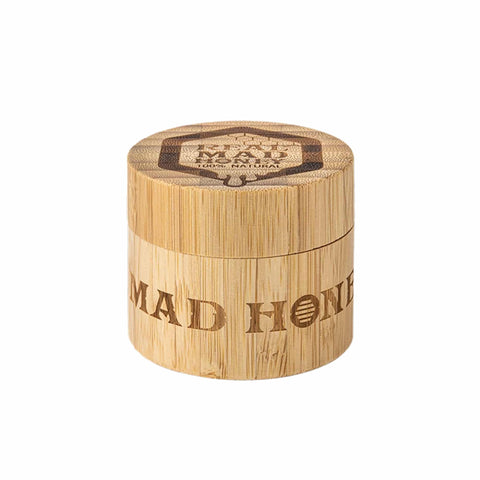
Real Mad Honey is a raw honey, strained and jarred without heating. Nepali mad honey is dark, earthy and woody, with a bitter finish, and it's often cloudy and quick to crystallise. Turkish deli bal is lighter and smoother and stays runny for longer.
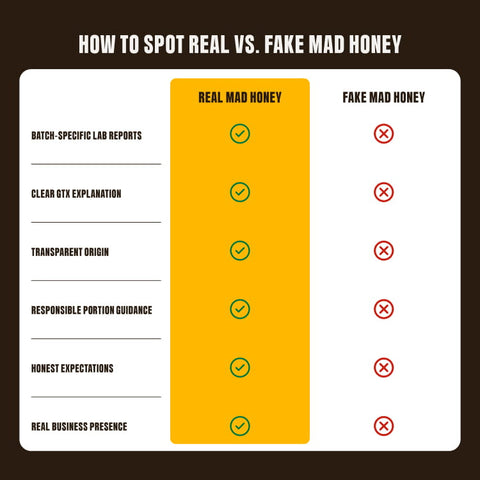
Both contain naturally occurring grayanotoxins from rhododendron nectar. Every batch of Real Mad Honey is tested by an independent laboratory for its grayanotoxin content. On our Lab Report page you can look up the report that applies to your order.

How to Tell Raw Honey From Regular Honey in a Shop
On a shelf, you can't see how honey was processed, but a few signs point one way or the other.
- The label: words like "raw", "unheated" or "unfiltered" describe how the producer handled the honey. A named floral source, such as acacia, chestnut or rhododendron, and a named region also tell you more than a general "blend".
- The look: raw honey is often cloudy, and you may see specks or a pale layer on top.
- The texture: a jar that has started to crystallise on the shelf is more likely to be raw.
- The variation: if a producer says each batch looks and tastes a little different, that usually points to honey from single harvests, without heavy blending.
Final Thoughts
Raw and regular honey start in the same hive. The trip from comb to jar is what sets them apart. Regular honey is processed so every jar looks and pours the same. Raw honey is strained and jarred as it is, leaving it cloudier, quicker to set and closer in taste to its flowers. Mad honey shows that raw character well, with a dark, earthy flavour that shifts from one harvest to the next.
Label information
Never more than 5 g a day – less than one level teaspoon, for adults only.
Eating more than 5 g a day can cause dizziness, nausea, cold sweats and low blood pressure. If that happens, stop, drink water and rest; if symptoms are severe, call 112 or see a doctor. Not recommended for children, during pregnancy or breastfeeding, for people with heart or blood pressure conditions, or if allergic to honey. Taking medication? Ask your doctor first.