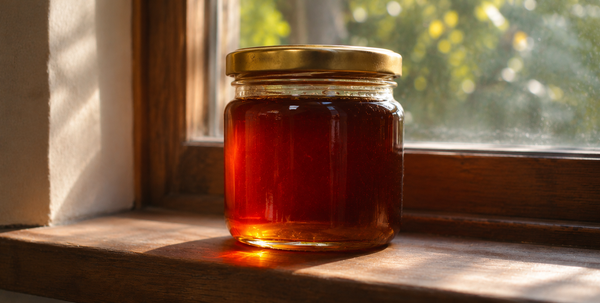
- Mad honey comes from the nectar of a few wild rhododendron species, not the whole genus.
- In Turkey, the main sources are purple Rhododendron ponticum and yellow Rhododendron luteum.
- In Nepal, the bees forage on Himalayan rhododendrons such as Rhododendron arboreum, high on mountain slopes.
- In the Alps, alpine rose honey is a different rhododendron honey sold as ordinary honey.
Most people in Europe know rhododendrons as garden shrubs covering parks in pink and purple every May. They belong to a very large genus in the heath family (Ericaceae), with well over 1,000 species growing from coastal forests to high mountain slopes.
Only a handful are significant for mad honey, and they grow wild in two places: the forests above Turkey's eastern Black Sea coast and the Himalayan foothills of Nepal.
What Is Rhododendron Honey?
Rhododendron honey is honey that bees make mainly from rhododendron nectar. The name covers two different things. Mad honey, called deli bal in Turkey, comes from a few wild species in Turkey and Nepal whose nectar contains naturally occurring grayanotoxins. Other rhododendron honeys come from species such as the alpine rose of the European Alps and are sold as ordinary honey. Which rhododendron the bees visit decides what kind of honey they make.
Rhododendrons of the Black Sea Forests
Turkey has five native rhododendron species, almost all of them in the north. Two are the main sources of deli bal, and beekeepers place their hives where both grow.
Rhododendron ponticum (Pontic Rhododendron)
Rhododendron ponticum is an evergreen shrub, sometimes a small tree, with long, glossy dark green leaves and clusters of purple to lilac flowers. It grows in the damp understorey of broadleaf forests, often under beech, and in places it forms dense thickets on the slopes.
Outside the Black Sea region, the species also grows wild in a small area of southern Portugal and Spain, and it's widely planted in parks and gardens across Western Europe.
Rhododendron luteum (Yellow Azalea)
Rhododendron luteum, also called the yellow azalea or Pontic azalea, is a deciduous shrub that loses its leaves in winter. In spring, it produces clusters of bright yellow, funnel-shaped flowers with a sweet, honeysuckle-like scent, often before the new leaves open.

Where and When They Flower
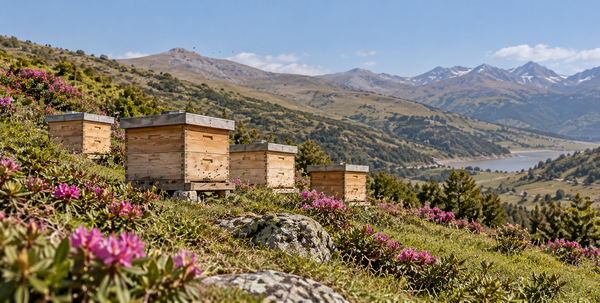
Both species grow along the eastern Black Sea region, from the coastal hills up into the Kaçkar Mountains above Rize and Artvin. Rhododendron ponticum grows from near sea level up to roughly 2,000 metres, while Rhododendron luteum reaches into higher mountain meadows. They flower in spring and early summer, usually from around April to June, depending on altitude, with the lower slopes blooming first.
At any one hive site, the flowering that matters for deli bal is short, often only a few weeks. This narrow window is the main reason the harvest is so small.
Rhododendrons of the Himalayan Slopes
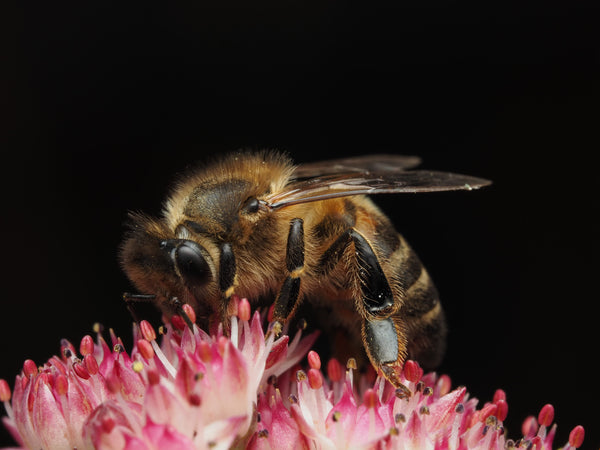
In Nepal, mad honey is made by the Himalayan giant honey bee, Apis laboriosa, which builds its nests on high cliffs and forages across the rhododendron forests around them.
Rhododendron arboreum (Lali Gurans)
Rhododendron arboreum, the tree rhododendron, is Nepal's national flower, known locally as lali gurans. Unlike the shrubby species in Turkey, it can grow into a tree well over 10 metres tall, with rough, reddish bark and leathery leaves that are silvery or rusty brown underneath. Its flowers grow in dense, rounded clusters. They’re most often deep red, though pink and white forms grow at higher altitudes.
It's one of several rhododendrons in the Himalayan forests where the cliff bees forage. Other species grow alongside it, especially higher up, and the mix changes from valley to valley.

Where and When They Flower
Rhododendron arboreum grows across Nepal's mid-hills and mountain forests, from around 1,500 metres up to about 3,600 metres. It flowers from late winter into spring, roughly February to April, starting in the lower valleys and moving uphill as the weather warms. Above the tree line, smaller shrubby rhododendrons flower later in the season.
The cliff bees nest within flying distance of these forests, often between about 2,500 and 3,500 metres. Honey hunters harvest the combs twice a year, in spring and autumn.
Grayanotoxins in Rhododendron Nectar
Grayanotoxins are a group of natural compounds found in the leaves, flowers and nectar of certain rhododendrons and some of their relatives in the heath family. When bees collect that nectar, the compounds pass into the honey. Mad honey contains naturally occurring grayanotoxins from rhododendron nectar, and how much is present varies with the species, the altitude, the season and the weather in a given year.
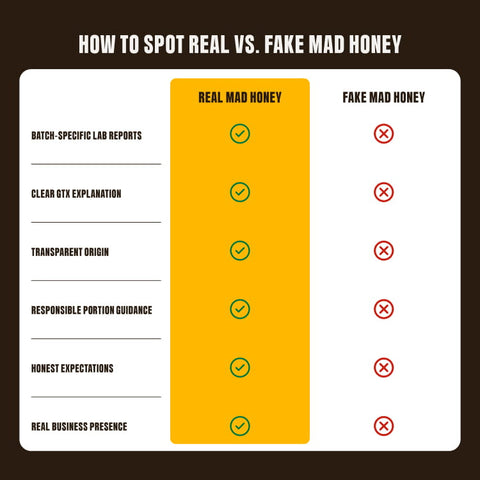
Every batch of Real Mad Honey is tested by an independent laboratory for its grayanotoxin content. On our Lab Report page you can look up the report that applies to your order.
Why Nepali and Turkish Mad Honey Taste Different
The two regions grow different rhododendrons in different climates, which is reflected in the honey. Nepali mad honey, made by wild cliff bees foraging across high Himalayan forests, is dark, earthy and woody, with a bitter finish, and it crystallises readily. Turkish deli bal, made by managed hives in the lower Black Sea forests, is lighter in colour, sweeter and smoother, and it pours freely.
Flowers other than rhododendrons contribute to the honey too. Bees rarely visit just one plant, so each honey also carries nectar from whatever else is blooming nearby, from wild herbs to chestnut trees.
Rhododendron Honey in the Alps
Europe has its own rhododendron honey, but it isn't mad honey. Alpine rose honey, known as miele di rododendro in Italy and Alpenrosenhonig in Austria, Switzerland and Germany, comes mainly from Rhododendron ferrugineum, the rusty-leaved alpine rose. This low, evergreen shrub grows on mountain slopes in the Alps, roughly between 1,500 and 2,500 metres, and covers whole hillsides in pinkish-red flowers in June and July.
Beekeepers move their hives up to the high pastures for the bloom, and the honey is sold as regular honey across the Alpine regions. It's pale and delicate, with a light floral taste, and it often crystallises into a fine, creamy texture.
Final Thoughts
Rhododendron honey depends entirely on which rhododendron the bees find. In Turkey, purple Rhododendron ponticum and yellow Rhododendron luteum flower for a few short weeks in the forests above the Black Sea. In Nepal, red tree rhododendrons and their high-altitude relatives bloom across the Himalayan slopes where the cliff bees nest. In the Alps, the alpine rose gives a completely different honey.
Label information
Never more than 5 g a day – less than one level teaspoon, for adults only.
Eating more than 5 g a day can cause dizziness, nausea, cold sweats and low blood pressure. If that happens, stop, drink water and rest; if symptoms are severe, call 112 or see a doctor. Not recommended for children, during pregnancy or breastfeeding, for people with heart or blood pressure conditions, or if allergic to honey. Taking medication? Ask your doctor first.