If you are choosing between them, or trying to work out what mad honey actually does before buying a jar, the answers depend on knowing what is in the honey rather than on the label. This guide covers the origins, the effects, and what separates a jar worth buying from one that is not.
What is mad honey?
Mad honey is honey that carries grayanotoxins, a group of compounds present in the nectar of certain rhododendron species before a bee ever reaches the flower.
Both Nepalese and Turkish honey contain the same compounds, and what separates them is how much. That depends entirely on what the bees had access to during the flowering window, which is set by the landscape rather than by anything in the hive.
It goes by several names depending on origin:
-
Himalayan mad honey and Nepalese mad honey, for the Nepalese version
-
Deli bal, the Turkish name for the Black Sea version
-
Red honey, cliff honey, and mad buzz honey, used more loosely
Concentration varies considerably between harvests, which is why two jars can look identical and behave quite differently. You can read more about what mad honey is and where its compounds come from.
What is the difference between Nepalese and Turkish mad honey?
Nepalese and Turkish mad honey are made by different bee species, from different rhododendrons, and collected in entirely different ways.
The main differences are:
-
The bee. Nepalese honey comes from Apis laboriosa, the world's largest honey bee, which cannot be kept in hives. Turkish honey comes from the European honey bee kept in managed hives.
-
The flowers. Rhododendron arboreum dominates in Nepal, while ponticum and luteum dominate along the Black Sea.
-
The harvest. Nepalese honey is cut from wild cliff colonies reached by rope ladder. Turkish honey is collected conventionally from hives moved into mountain meadows.
-
The color. Nepalese runs deep amber to reddish brown; Turkish runs pale gold to light amber.
-
The taste. Nepalese is earthy and resinous with a bitter finish; Turkish is floral and sweeter with milder bitterness.
-
The strength. Nepalese is generally stronger, though this varies more than the averages suggest.
Both are genuine mad honey, and both work the same way in the body. Where mad honey comes from covers the two harvesting regions in more detail.
What does mad honey do?
Mad honey produces a warm, physically relaxed state that arrives gradually and fades over a few hours. It is felt in the body rather than in perception.
The effects people describe most often are:
-
Warmth spreading through the chest and limbs
-
A light tingling on the lips and tongue
-
Muscular tension releasing through the shoulders and neck
-
A slower, calmer mental pace
-
A mild lift in mood, usually described as contentment
-
Easier sleep when taken in the evening
Grayanotoxins act on the sodium channels involved in how nerve and muscle cells send signals, which is why the experience registers through the body rather than as a change in what you see or think.
What mad honey does not do is produce hallucinations. Marketing describing it as psychedelic sets the wrong expectation, and disappointment usually follows.
Which mad honey is stronger?
Nepalese mad honey is generally stronger than Turkish, and the reason is the landscape rather than anything about the bees.
High Himalayan slopes support a sparse plant community where rhododendrons make up a large share of what a colony can reach, which concentrates the compounds. The Black Sea coast supports a richer mix, so the same plants make up a smaller proportion of what the bees collect.
The averages hold, and the individual jars frequently do not:
-
Both origins vary between harvests depending on the season and the weather.
-
A strong Turkish harvest can carry more grayanotoxin than a mild Nepalese one.
-
Two Nepalese jars from different valleys can differ more than the two origins do on average.
-
Nothing about color, price, or origin tells you which you have.
That is the practical limit of any origin comparison. The label indicates likely character, while only laboratory analysis of the specific batch establishes what a particular jar contains.
How much mad honey should you take?
A teaspoon is the conventional serving, and half a teaspoon is a sensible starting point with any jar you have not tried before.
For a first serving:
-
Take half a teaspoon on a relatively empty stomach.
-
Sit down and stay seated for the first twenty minutes.
-
Wait a full hour before considering any more.
-
Avoid alcohol entirely.
-
Note how that jar felt before adjusting next time.
Effects take twenty to forty minutes to appear and considerably longer after a meal. That delay is the most common reason people take too much, since a second serving taken during the wait arrives on top of the first.
Anyone pregnant, anyone with a heart condition or low blood pressure, and anyone taking blood pressure medication should speak to a doctor before trying mad honey.
Where to buy Nepalese and Turkish mad honey?
Most sellers stock one origin and describe it in general terms, which leaves you choosing between sellers rather than between honeys.
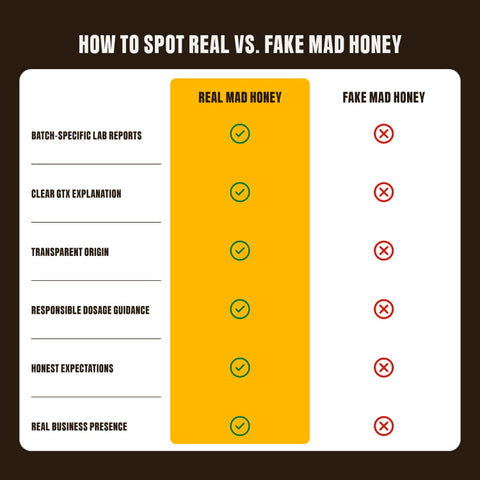
When comparing, look for:
-
Published laboratory analysis tied to the batch on sale
-
A named harvesting region rather than vague terms like Himalayan
-
Conservative serving guidance rather than claims about strength
-
Honest acknowledgment that harvests vary
-
Clear contact details and return terms
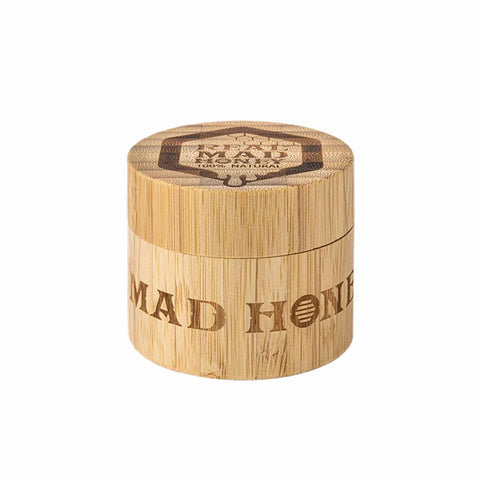
Real Mad Honey carries both origins. The Nepalese honey is wild-harvested above 3,500 meters through established Himalayan honey-hunting communities, and the Turkish honey comes from small family producers along the Black Sea.
Every batch is analyzed by an independent laboratory before sale, with the report published against the batch on the shelf. Jars run from 50g to 500g in both origins, orders ship from the Netherlands with no customs charges within the EU, and a 60-day guarantee covers unopened returns.
Finding the right mad honey for you
The choice between origins comes down to what you want rather than to quality, since neither is better than the other.
Turkish honey suits a first purchase. The gentler profile and milder bitterness make a serving easier to judge, and it introduces the category without the sharper edge the Nepalese version has.
Nepalese honey suits anyone wanting the fuller character the reputation describes, and it is the stronger of the two on average.
If you cannot decide, small jars of each cost less than committing to one and discovering the preference afterward. Explore the full range of tested mad honey to compare what is currently available.