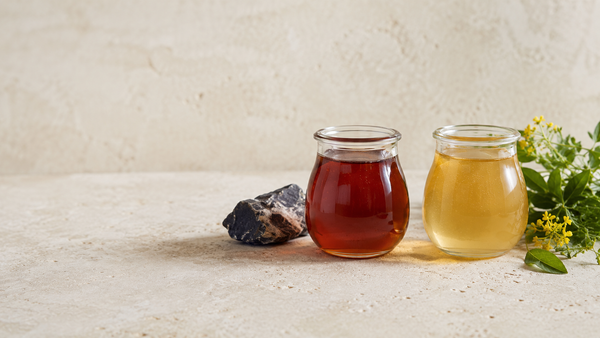
Nepali and Turkish mad honey are made by different bee species, from different rhododendrons, collected in entirely different ways. That is a considerably wider gap than most comparisons acknowledge, and it explains why the two behave differently in the jar rather than being regional variations of one product.
Nepali honey runs darker, heavier and generally stronger, while Turkish honey is lighter, smoother and gentler. Neither is better, and the choice between them depends more on what someone wants from a jar than on any measure of quality.
The Short Answer
The difference runs through every stage of production. Nepali mad honey comes from wild colonies of the world's largest honey bee, built on Himalayan cliff faces and reached by rope ladder. Turkish mad honey comes from managed hives of the European honey bee, moved into Black Sea meadows during the flowering season.
The honey reflects that. Nepali jars are darker, thicker and more bitter with a heavier effect, while Turkish jars are paler, looser and sweeter with a gentler one, and the difference is noticeable from the first spoonful.
What the two share is the mechanism. Both contain grayanotoxins from rhododendron nectar, both work the same way in the body, and both vary between harvests in ways that matter more than the origin on the label.

Where Nepali and Turkish Mad Honey Come From
Nepali mad honey comes from the mountain districts of central Nepal, with Lamjung, Myagdi and the wider Annapurna region among the areas most associated with it. Colonies sit on cliff faces at elevations above 2,500 metres, in terrain no road reaches, and no vehicle can service.
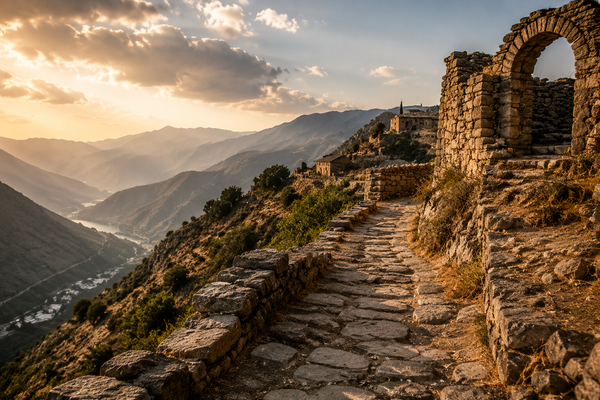
Turkish mad honey comes from the humid forested slopes along the Black Sea coast, particularly through the Kaçkar range and the provinces around Rize and Trabzon. The climate there is unusually wet for the region, which is exactly what the relevant plants need to spread.
Altitude is the substantive difference between the two landscapes. High Himalayan slopes support a sparse plant community where rhododendrons make up a large share of what a colony can reach, while the Black Sea coast supports a richer mix in which the relevant species dominate through sheer density rather than through lack of competition.
Both regions have produced mad honey for centuries, though the written records differ considerably. Turkish deli bal appears in Greek accounts from 401 BC, while the Nepali tradition was documented far more recently despite being no younger.

What Bees Make Mad Honey?
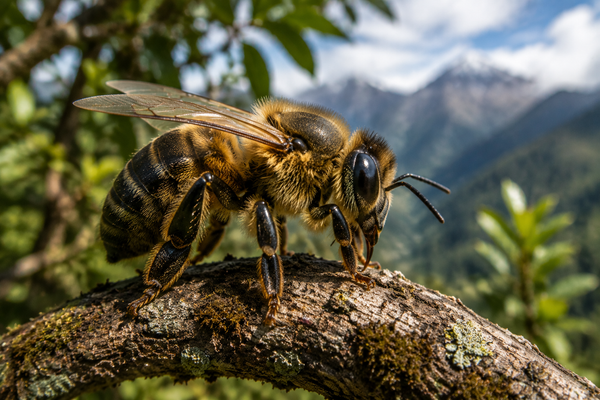
The bee is the single biggest difference between the two, and it is the reason the harvesting methods diverge so completely. Nepali mad honey is made by Apis laboriosa, the Himalayan giant honey bee and the largest bee species in the world. Workers reach close to three centimetres, nearly twice the length of a European honey bee, and the species builds single enormous combs in the open air beneath cliff overhangs facing south, where the rock holds warmth and shelters the colony from wind.
The decisive fact about it is that it cannot be kept. Every attempt to move these colonies into conventional hives has failed, since the species did not evolve to nest in enclosed spaces and abandons any structure it is placed in. There is no farmed version of Nepali mad honey, and there never has been.
Turkish mad honey is made by Apis mellifera, the European honey bee, which is the species behind almost all commercial honey worldwide. It nests in cavities, tolerates management, and can be moved between locations, which is what makes the Turkish approach possible at all.
Which Rhododendrons Produce Mad Honey?
The plants differ as much as the bees, and they account for much of the difference in flavour and character. Rhododendron arboreum is the species most associated with Nepali mad honey. It grows as a tree rather than a shrub, spreads across broad elevation bands through the Himalayas, and flowers in a concentrated burst through the spring months. Pollen studies of Nepali honey consistently find it multifloral, with rhododendron dominant but rarely alone, since colonies forage across a wide range of altitudes and plant communities.
Rhododendron ponticum and Rhododendron luteum are the Turkish species, the purple-flowered and yellow-flowered shrubs that carpet the Black Sea slopes. They grow in continuous stands dense enough to dominate whatever else is in bloom nearby, which produces a more consistent floral profile than the Himalayan mix.
That difference in floral consistency matters for what ends up in the jar. Turkish honey tends to vary less between harvests because the bees work a narrower range of plants, while Nepali honey varies more because the mix changes from valley to valley and season to season. Where mad honey comes from covers those conditions in more detail.

How Mad Honey Is Harvested in Nepal and Turkey
The two methods have almost nothing in common beyond the end product, and the contrast is the clearest illustration of how differently these two honeys reach a jar.
Cliff Harvesting in Nepal
Teams of ten to fifteen people work a single cliff during the flowering window, mainly across April and May, with a smaller collection sometimes following in autumn. Ladders woven from bamboo and rope are dropped from the clifftop, one or two harvesters descend to the nest while the rest manage the lines from above, and smoke raised from the base moves the bees off the comb.
Sections of comb are cut free with long poles and lowered in woven baskets to the ground. Nests commonly sit twenty-five metres or more above the valley floor, and a single cliff can occupy a full day.
Managed Hives in Turkey
Beekeepers move hives into high meadows while the rhododendrons flower and collect frames conventionally, which is small-scale pastoral beekeeping rather than honey hunting. The hives can be relocated, though the rhododendron stands cannot, so a beekeeper places colonies near what is already established and already in bloom.
The practical consequence of both is supply. Nepali harvests are limited by the number of accessible cliffs and the people willing to climb them, while Turkish supply runs steadier because the process is repeatable and the flowering window is longer.
How Do They Taste and Look?
The differences are apparent before anything is swallowed. Nepali honey runs deep amber to reddish brown, noticeably thicker than most honey, and crystallises readily as it sits. The taste opens sweet then turns earthy and resinous, with a distinct bitterness on the finish and a warmth that catches at the back of the throat within a minute or two.
Turkish honey runs pale gold to light amber, pours more freely, and carries a floral and faintly herbal aroma rather than a resinous one. The sweetness arrives first with the bitterness following behind it, milder throughout and less likely to surprise anyone trying mad honey for the first time.
Neither profile is fixed. Both vary with the specific harvest, and a pale Nepali jar or a darker Turkish one is entirely possible depending on the season and the forage, which is why appearance is a poor guide to origin and a worse one to strength.
Which Is Stronger, Nepali or Turkish?
Nepali honey is generally stronger, and the reasons are structural rather than incidental, though the averages hold less reliably than the comparison suggests.
| Nepali | Turkish | |
|---|---|---|
| Typical strength | Higher on average | Lower on average |
| Why | Sparse alpine forage concentrates rhododendron nectar | Richer coastal mix dilutes it |
| Consistency between harvests | Varies more, valley to valley | Varies less, denser single-species stands |
| Effect described as | Fuller and heavier | Gentler and more even |
| Best suited to | Anyone wanting the fullest character | A first jar |
The averages hold, and the individual jars frequently do not. A strong Turkish harvest can carry more grayanotoxin than a mild Nepali one, since both depend on which plants dominated the forage, the elevation of the colony, and the weather across the season.
That is the practical limit of any origin comparison. The label indicates likely character rather than measured strength, and only laboratory analysis of the specific batch establishes what a particular jar contains. What mad honey is covers why those figures move so much between harvests.
Which One Should You Buy?
The choice comes down to experience and intention rather than to quality, since neither origin is better than the other and both suit different buyers:
-
A first jar. Turkish suits better, since the gentler profile and milder bitterness make a serving easier to judge without the sharper introduction Nepali provides.
-
The fullest character. Nepali delivers what the reputation describes, with the darker, heavier profile most people mean when they talk about mad honey.
-
Sensitivity to bitterness. Turkish is considerably easier on the palate, and the sweetness arriving first makes it more approachable.
-
Buying for the tradition. Nepali carries the cliff-harvesting story, which matters to anyone buying for what the product represents rather than only for what it does.
-
Steady availability. Turkish supply runs more reliably across the year, while Nepali stock follows two short harvests and sells through between them.
-
Trying both. Small jars of each cost less than committing to one and discovering the preference afterwards.
Whichever applies, the batch report matters more than the origin. A tested Turkish jar is a known quantity while an untested Nepali one is not, regardless of which is stronger on average.

Where to Buy Nepali and Turkish Mad Honey
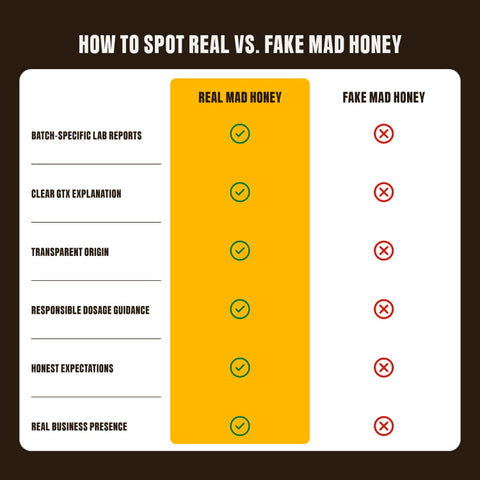
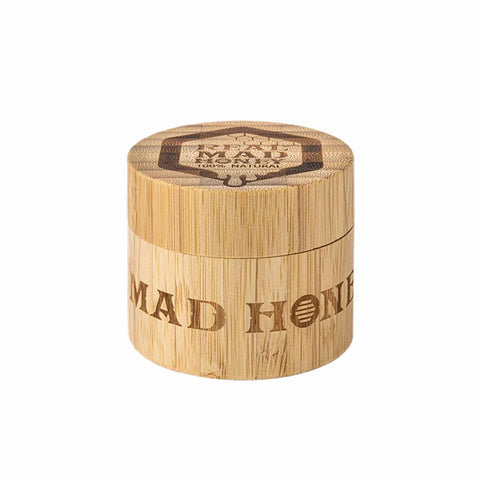
Most sellers stock one origin and describe it in general terms, which leaves a buyer choosing between sellers rather than between honeys. Real Mad Honey carries both. The Nepali honey is wild-harvested above 3,500 metres through established Himalayan honey-hunting communities, and the Turkish honey comes from small family producers along the Black Sea who have made it for generations.
Every batch is analysed by an independent laboratory before sale, with the report published against the batch on the shelf rather than summarised, and harvests falling outside the accepted standards are rejected rather than blended into the next. That allows the origin to be chosen for character while the figures settle strength, which is the only combination that answers both questions.
Jars run from 50g to 500g in both origins, orders ship from the Netherlands with no customs charges within the EU, and a 60-day guarantee covers unopened returns.
Bottom Line: The Real Difference
Two bee species, two groups of rhododendrons and two entirely separate traditions produce Nepali and Turkish mad honey. That is a wider gap than the phrase regional difference suggests, and it explains why the two jars behave differently rather than tasting slightly unlike one another.
Nepali honey is darker, heavier and stronger on average, drawn from wild cliff colonies in a sparse alpine landscape where rhododendrons dominate what the bees can reach. Turkish honey is paler, smoother and gentler, produced by managed hives among a richer coastal mix, and it makes for an easier introduction for anyone new to the category.
What neither label settles is the jar. Both vary between harvests enough that averages fail regularly on individual batches, which leaves origin as a guide to character and the batch report as the only guide to strength.