Mad honey has been surrounded by curiosity for centuries. Long before it became a modern niche product, communities in regions where it naturally occurs valued it and built traditions around its harvest.
Unlike ordinary honey, mad honey contains naturally occurring compounds from rhododendron nectar that give it a very different identity. This has led to centuries of stories, beliefs, and uses that have shaped how people view it today.
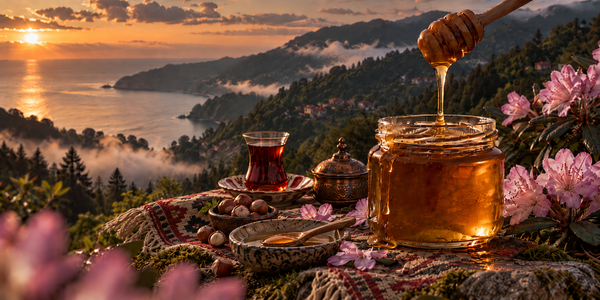
Its story runs through two very different places: the Black Sea coast of Turkey and the cliffs of the Himalayas.

What Is Mad Honey?
Mad honey is honey produced when bees collect nectar from certain rhododendron species containing naturally occurring grayanotoxins. These compounds are responsible for the distinctive characteristics associated with mad honey and are what separate it from conventional varieties.
Understanding mad honey starts with its history: where it comes from and the communities who have harvested it for generations.
The Ancient History of Mad Honey Use
Mad honey has one of the most unusual histories of any natural food product. One of the earliest recorded references comes from the Black Sea region, where ancient accounts describe soldiers eating the local honey.
The famous example comes from the Greek historian Xenophon, who described soldiers encountering honey during the retreat of the Ten Thousand in 401 BC. The honey was linked to local rhododendron nectar, making this one of history’s earliest written accounts of mad honey.
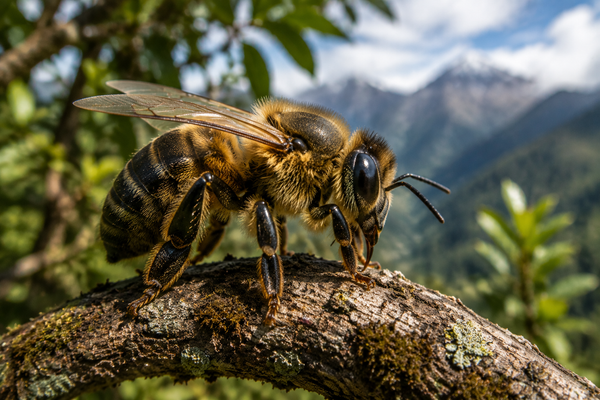
In Himalayan regions, mad honey has also been connected to generations of traditional honey harvesting. Communities have collected wild honey from cliff-dwelling giant Himalayan honeybees, preserving knowledge around the seasonal process and the environments where it is found.
Today, that harvesting tradition remains central to the cultural story of mad honey.

What Makes Mad Honey Different From Regular Honey?
The difference between mad honey and regular honey begins with the relationship between bees, plants, and the environment.
Regular honey is primarily valued for flavour, sweetness, and floral variety. Mad honey is different because bees collect nectar from certain rhododendron species that contain naturally occurring compounds that influence the final honey.
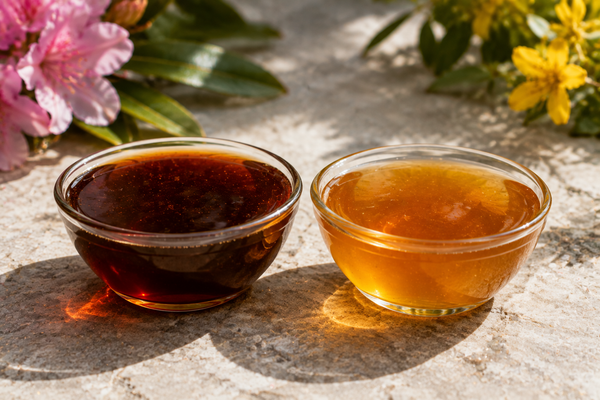
The bee species, altitude, climate, and available plants all contribute to the final character of mad honey. This is why different regions and harvests can produce noticeably different profiles.
The final product reflects the entire ecosystem behind it — the bees collecting the nectar, the plants growing in that environment, and the conditions surrounding each harvest.
What Is in Mad Honey?
Research into mad honey centres on grayanotoxins, a group of compounds the bees carry over from rhododendron nectar.
Grayanotoxin content varies between rhododendron species, altitude, season, and harvest, which is why batch-level analysis tells you more than country of origin does.

Why Quality and Testing Matter With Mad Honey
Because mad honey varies naturally, knowing the origin of a product is only part of understanding it.
The rhododendron species, altitude, harvest conditions, and season can all influence the final honey. Two jars from different batches may have different characteristics even if they come from the same region.
Testing provides more transparency because it gives information about the specific batch rather than relying only on general descriptions or assumptions based on where the honey comes from.
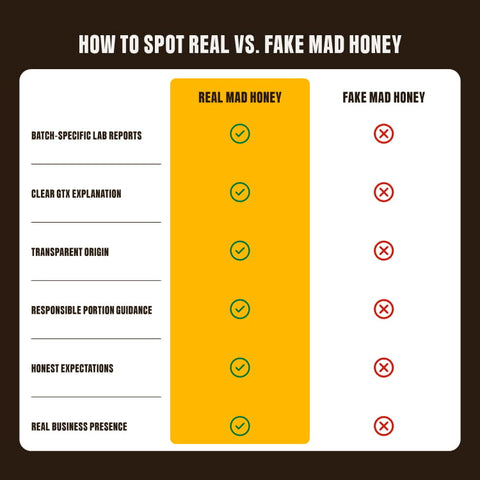
When buying mad honey, important factors include:
-
Clear sourcing information
-
Batch-specific laboratory analysis
-
Transparent product information
-
Responsible guidance around use
Quality testing does not change the traditional nature of mad honey, but it gives buyers a clearer understanding of what they are purchasing.
The most realistic way to view mad honey is as a traditional natural product with a unique history, unusual chemistry, and cultural significance.

Where to Buy Tested Mad Honey
Because mad honey is naturally variable, transparency matters more than simple claims about origin.
A trustworthy seller should be able to explain where the honey comes from, how it was harvested, and what information is available about the specific batch.
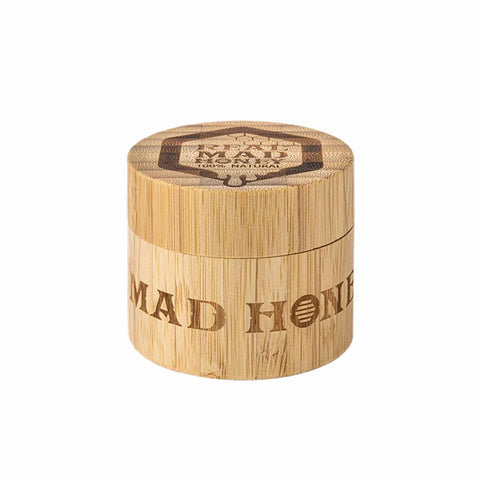
Real Mad Honey focuses on Himalayan sourcing, traditional harvesting communities, and independent laboratory testing to provide more visibility into each batch. The focus is on helping customers understand the product they are buying rather than relying only on reputation or tradition.
Takeaway: A Honey With a Long History
Mad honey sits between history and modern science. For centuries, communities have valued it as a unique natural product, while modern research has helped explain the compounds responsible for its unusual characteristics.
Its story comes from the combination of cultural history, natural chemistry and the environments where it is produced.
Understanding where mad honey comes from, how it is made and what science actually says allows people to appreciate it for what it is: one of the world’s most distinctive traditional honeys.