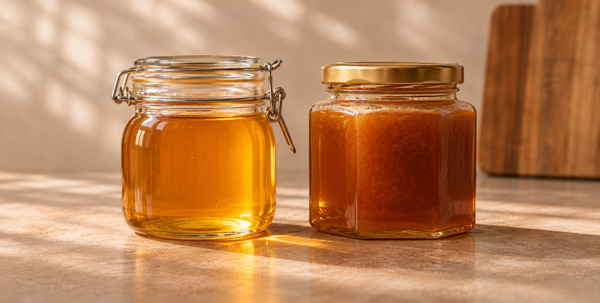
- Mad honey's reddish-amber colour comes mainly from the flowers the bees visit.
- Nepali mad honey is darker and reddish-amber, while Turkish deli bal is lighter.
- Season, altitude and the mix of flowers change the honey’s shade between harvests.
- Colour doesn't show a honey's grayanotoxin content. Only a lab test does.
People often refer to mad honey as "red honey", and when you hold a jar up to the light, it's easy to see why. The darker kinds seem to almost glow a deep reddish-amber. That’s a shade you hardly find in most supermarket honey. Look closer, though, and it's rarely true red. Depending on where and when it was harvested, mad honey can be anything from golden-amber to a dark reddish-brown
This colour comes from the flowers the bees fed on, the time of year and the mountains where the hives or cliff nests sit. Let’s have a closer look.
Why Is Mad Honey Red?
Mad honey gets its reddish colour from natural compounds and minerals in the nectar and pollen the bees collect. Most of that nectar comes from rhododendrons, mixed with other mountain flowers that bloom at the same time. Together, they give mad honey a darker, reddish-amber tone than most everyday honeys. The exact shade changes with the region, the altitude and the season, so Nepali mad honey is usually darker and redder than the lighter Turkish deli bal, and no two harvests look the same.
What Gives Honey Its Colour
Every honey's colour starts with its flowers. Nectar and pollen carry small amounts of plant pigments, minerals and other natural compounds, which pass into the honey. Flowers that produce very little of them result in pale honey. Flowers that produce more give darker honey.
That's why acacia honey is almost clear, while chestnut, heather and buckwheat honeys are deep brown. Beekeepers and honey traders grade colour on the Pfund scale, which runs from "water white" through several shades of amber to "dark amber". Most supermarket honeys sit in the lighter middle of that range. Mad honey sits towards the darker end.
How Rhododendron Nectar Determines Mad Honey's Colour
Mad honey comes mainly from wild rhododendrons, such as Rhododendron ponticum in Turkey and Rhododendron arboreum in Nepal, and contains naturally occurring grayanotoxins from rhododendron nectar.
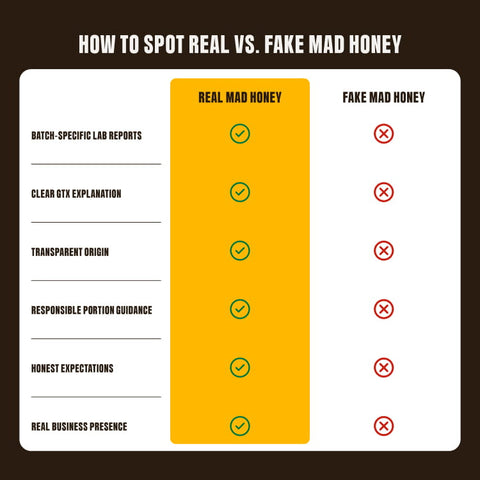
Colour and grayanotoxins are separate things, though. A darker or redder jar doesn't contain more grayanotoxins, just like a lighter one doesn't contain less. The only way to know a batch's grayanotoxin content is to test it. Every batch of Real Mad Honey is tested by an independent laboratory for its grayanotoxin content. On our Lab Report page you can look up the report that applies to your order.
The Other Flowers Bees Visit
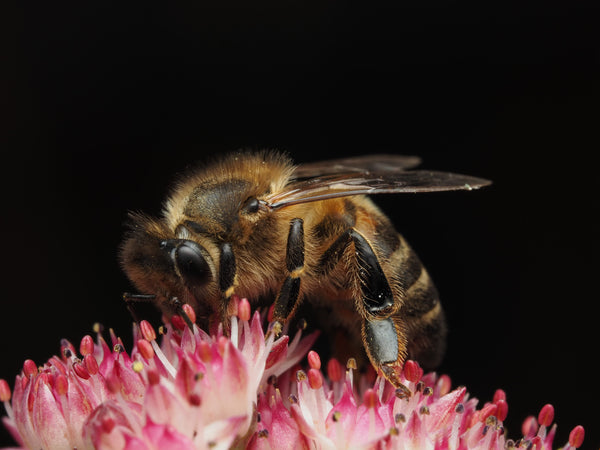
Bees rarely stick to a single plant. While the rhododendrons are in bloom, they also visit whatever else is flowering nearby, such as wild herbs, mountain shrubs, fruit trees and, on the Black Sea coast, chestnut trees. Each of these adds its own colour to the honey.
A harvest with more chestnut nectar, for example, can turn out darker and browner, while one with more light-coloured wildflowers may look paler.
Seasons, Altitude and Region
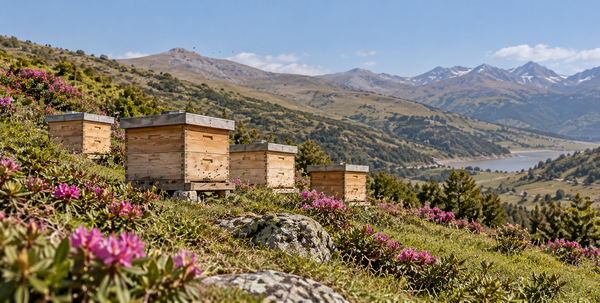
Which flowers are open depends on the time of year and the slope elevation. In the Himalayas, rhododendrons bloom first in the lower valleys and later higher up, so a cliff nest at one altitude feeds on a different mix of flowers from a nest further up the same mountain. Nepali honey hunters harvest in spring and autumn, and the two harvests come from different flowering periods, which can impact the colour.
Region matters in the same way. The Himalayan forests of Nepal and the Black Sea forests of north-eastern Turkey have different rhododendron species, companion plants and climates. Even within one region, one valley can bloom earlier or later than the next.
All of this changes every year. A warm spring, a late frost or a wet summer shifts when plants flower and how much nectar they produce. That's why no two harvests of mad honey look the same, and why a new jar can be a shade lighter or darker than your last one. This is normal for raw honey from a single region.
Nepali vs Turkish Mad Honey Colour
Nepali mad honey is darker than Turkish mad honey. It's usually a deep reddish-amber, sometimes close to dark brown, and the red shows most when light passes through it. Turkish deli bal is lighter, closer to golden-amber, and clearer in the jar.
Crystallisation changes how both look. Nepali mad honey crystallises readily, and once it sets, it looks paler and more opaque because the tiny crystals scatter light instead of letting it through. Over long storage, honey also slowly darkens.
Final Thoughts
The colour of a jar of mad honey tells you a lot about where it came from. Most of it comes from rhododendron nectar, and the other flowers the bees found that season make it a little lighter or darker. The season, the altitude and the region decide which flowers the bees find. That's why Nepali mad honey runs darker and redder than Turkish deli bal, and why each harvest looks a little different from the last. So if your next jar is a shade lighter or darker, that’s the mountains and the weather doing their part. For what’s actually in a batch, the colour won’t tell you, but the lab report will.
Label information
Never more than 5 g a day – less than one level teaspoon, for adults only.
Eating more than 5 g a day can cause dizziness, nausea, cold sweats and low blood pressure. If that happens, stop, drink water and rest; if symptoms are severe, call 112 or see a doctor. Not recommended for children, during pregnancy or breastfeeding, for people with heart or blood pressure conditions, or if allergic to honey. Taking medication? Ask your doctor first.