Key Takeaways
- On its own: The simplest way is straight from a spoon, within the 5 g limit.
- In drinks: Stir it into tea or other drinks only once they have cooled below 40 °C.
- With food: Yoghurt, fresh fruit, oats and aged cheese all suit its earthy, slightly bitter taste.
- Count it all: The limit is never more than 5 g a day in total, including honey added to food and drinks.
- Sharing: Measure each person's amount on its own spoon rather than drizzling it over a shared dish.
Mad honey tastes noticeably different from ordinary honey. It is typically darker, with a more bitter, earthy taste and a slight burning finish on the tongue. That character makes it interesting to pair with food, as long as you keep the amount small.
Here is how mad honey has traditionally been eaten in Nepal and Turkey, and simple ways to enjoy it at home.
How Mad Honey Has Traditionally Been Eaten
In the mountain villages of Nepal, where honey hunters harvest it from wild cliff colonies, and along Turkey's Black Sea coast, where it is called deli bal, mad honey was never an everyday sweetener. In both regions it was set apart from ordinary honey and eaten in small amounts, often simply from a spoon.
That idea still works today: a small, measured amount, enjoyed for its taste.
Ways to Enjoy Mad Honey at Home
On Its Own
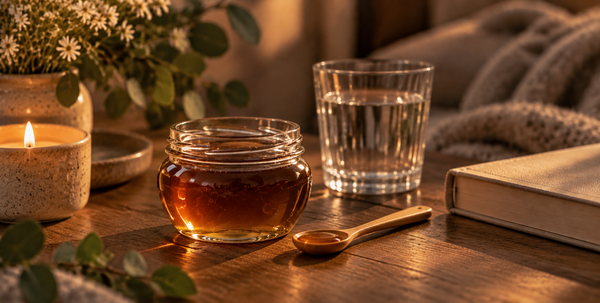
Straight from a spoon is the simplest way, and the easiest way to taste the difference between Nepali and Turkish mad honey. Nepali honey is darker, earthier and more bitter; Turkish honey is lighter and smoother. Measure it: never more than 5 g a day, less than one level teaspoon.
In Tea and Other Drinks
Mad honey goes well with green, black or herbal tea. As with any raw honey, add it only once the drink has cooled below 40 °C, and stir well so it dissolves completely.
With Yoghurt, Fruit and Oats
A drizzle over yoghurt, fresh fruit or overnight oats balances mad honey's bitter edge with something creamy or fresh. Measure the honey before you add it.

With Cheese and Nuts
Earthy, slightly bitter honey suits salty, aged cheeses and walnuts. A small amount next to a cheese board brings out both.
In Cooking and Baking
You can use mad honey in recipes like any other honey; cooking with mad honey has ideas. Because honey is dense, it doesn't spread evenly through a dish, so the grayanotoxins may not be evenly spread either. Measure what goes in and make sure no one eats more than 5 g a day in total.
Sharing Mad Honey
If you share a jar with family or friends, measure each person's amount on its own spoon rather than drizzling it over a shared dish or stirring it into a shared pot of tea. That way everyone knows how much they have had. Mad honey is for adults only.
Keeping to the Limit
Never more than 5 g a day – less than one level teaspoon, for adults only. The limit counts everything you eat that day: honey from a spoon, in drinks and in food together. How much mad honey per day explains it in more detail.
Eating more than 5 g a day can cause dizziness, nausea, cold sweats and low blood pressure. If that happens, stop, drink water and rest; if symptoms are severe, call 112 or see a doctor. Not recommended for children, during pregnancy or breastfeeding, for people with heart or blood pressure conditions, or if allergic to honey. Taking medication? Ask your doctor first.
Storing Mad Honey
Like other raw honey, mad honey can crystallise over time, and that's completely natural. Store it dark at room temperature with the lid closed, out of reach of children.
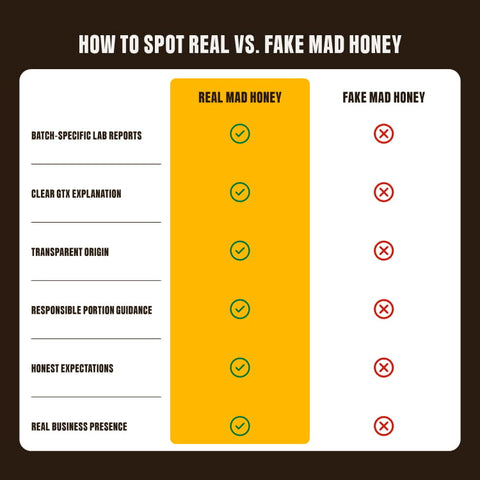
The grayanotoxin content varies from harvest to harvest, which is why every batch of Real Mad Honey is tested by an independent laboratory for its grayanotoxin content. On our Lab Report page you can look up the report that applies to your order.
Final Thoughts
Mad honey has always been a honey to enjoy in small amounts, and its earthy, bitter taste makes it a good match for tea, yoghurt, fruit and cheese. Whichever way you choose, measure it and keep to the limit: never more than 5 g a day, less than one level teaspoon, for adults only.