Key Takeaways
- Name: "Deli bal" is Turkish for "crazy honey."
- Origin: Deli bal is made by local beekeepers in Turkey's Black Sea region from rhododendron nectar that contains grayanotoxins.
- History: Deli bal knocked two ancient armies off their feet, and writers recorded it more than 2,400 years ago.
- Strength: Deli bal is milder than Nepali mad honey on average, but only a batch lab report shows how strong a jar is.
- Safety: Start with 1 teaspoon (about 5 ml), and skip deli bal if you have heart or blood pressure issues.
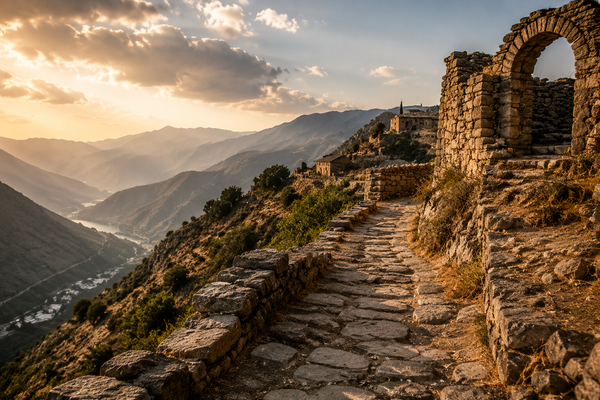
About 2,400 years ago, a Greek army marching along the Black Sea coast found honey in the local villages, ate it, and couldn't stand up. The honey came from the same hills where beekeepers still make it today.
Deli bal is the Turkish name for mad honey. It's made by local beekeepers in Turkey's Black Sea region, where bees feed on rhododendron flowers whose nectar contains grayanotoxins, the natural compounds behind mad honey's effects.
The Meaning Behind the Name Deli Bal
In Turkish, "deli" means crazy or mad, and "bal" means honey. "Mad honey" is simply the English translation of a name people in the Black Sea region have used for a long time.
The "crazy" comes from grayanotoxins (GTX), natural compounds found in the nectar of certain rhododendrons. Bees carry them from the flowers into the honey, and they act on the nervous system. In small amounts, people describe a calm, slowed-down feeling. Eat too much, and grayanotoxins can cause dizziness and nausea and leave you unable to stand, which is how the honey earned its name.
In Turkey, "deli bal" refers to honey made from rhododendron nectar specifically. Ordinary Turkish honey from other flowers doesn't contain grayanotoxins, so it doesn't carry the name or the effects.
Where Deli Bal Is Made
Deli bal is one of the mad honey strains, and it comes from the humid, forested slopes along Turkey's Black Sea coast. Local beekeepers move their hives up to the rhododendron slopes while the flowers bloom, then collect the honey once the season ends.
Deli bal is a small part of the honey made in the region, since it depends on a short flowering window and on hives sitting in the right place at the right time.

2,400 Years of Deli Bal on the Black Sea Coast
Few foods have a written history this long. The Black Sea coast was part of the Greek and Roman world, and several ancient writers noticed that the honey there behaved differently.
Xenophon and the Ten Thousand
In 401 BC, a Greek army marching home along the Black Sea coast found honeycombs in villages near today's Trabzon and ate them. The Greek writer Xenophon, who led the march, recorded that some soldiers acted drunk while others were vomiting and couldn't stand. Nobody died, and the soldiers recovered within a few days. This is one of the earliest written accounts of deli bal's effects.
Pompey's Soldiers on the Black Sea Coast
Around 65 BC, the Roman general Pompey was pushing through the mountains of Pontus. The Greek geographer Strabo later recorded what happened to part of his army.
Local mountain people allied with his enemy left bowls of the local honey along the road the Romans were using. The soldiers ate it, lost their senses, and were attacked while they couldn't fight back. Three units of Pompey's army were lost.
How Ancient Writers Described Deli Bal
Other ancient writers recorded the same honey. Pliny the Elder, the Roman naturalist, wrote in his Natural History that the Sanni people of Pontus made a honey called "maenomenon," meaning maddening. Aristotle and other Greek writers also mentioned intoxicating honey from the Black Sea coast.
Milder Doesn't Mean Weak: What Deli Bal Is Like
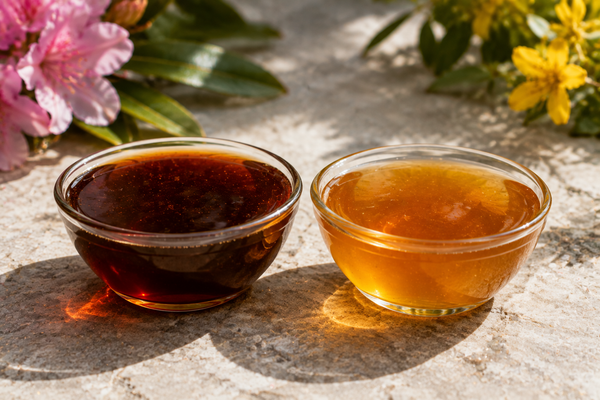
Deli bal is lighter and smoother than Nepali mad honey, and its effects tend to be gentler, which makes it a good choice when trying mad honey for the first time.
People describe the feeling as calm and slowed down, often with a light, warm sensation in the throat soon after swallowing. Some feel it clearly, while others notice very little, and both are normal.
"Milder" is an average, though. Grayanotoxin levels depend on the season and the flowers, and a strong deli bal harvest can be more potent than you'd expect. The origin tells you what kind of honey to expect, and the batch lab report tells you how strong your jar actually is.
How to Try Deli Bal Safely
Deli bal contains the same grayanotoxins as Nepali mad honey, so the same safety rules apply.
- Start with 1 teaspoon (about 5 ml), and stick to one teaspoon on a first try.
- Effects usually begin within 15-60 minutes and last 1-4 hours.
- Wait 45-60 minutes before even considering more.
- Keep deli bal below 40°C. If you add it to tea, let the drink cool first, since heat can weaken its effects.

Always stick to the recommended dosage. Skip deli bal if you take heart, blood pressure, or sleep medication or sedatives; have a heart condition or low blood pressure; are pregnant or breastfeeding; or are under 18. Don't mix it with alcohol. If you have any other health condition or take regular medication, talk to your doctor before trying it.
How to Spot Authentic Deli Bal
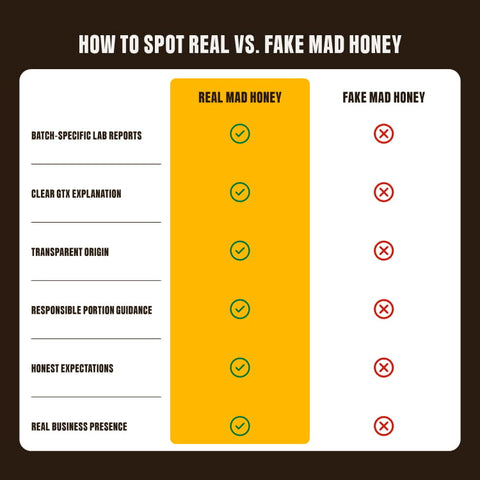
Deli bal has a long reputation, and some sellers use the name loosely. A few checks will tell you whether you’re buying an authentic Turkish mad honey.
| What to check on a deli bal jar | What to look for | Why it matters |
|---|---|---|
| Origin of the deli bal | A named region, such as Turkey's Black Sea coast, not just "Turkish honey" | Deli bal only comes from areas where grayanotoxin-producing rhododendrons grow |
| Lab report for the deli bal | A batch-specific report showing GTX I and GTX III levels | A deli bal lab report shows how strong that particular batch is |
| Batch number on the deli bal jar | A batch number that matches a published lab report | Matching numbers confirm the deli bal report belongs to your jar |
| Serving guidance for the deli bal | Clear advice to start with 1 teaspoon and wait before taking more | Deli bal sellers who give clear serving advice take safety seriously |
| How the deli bal is described | No claims that deli bal treats or cures anything, and no "strongest ever" promises | Deli bal has no proven medical benefits, and chasing strength raises the risk |
You can find batch lab reports for Real Mad Honey’s Turkish and Nepali mad honey strains. Batches that come back outside safe limits or look inconsistent are rejected.
Final Thoughts
When Xenophon's soldiers found honey in those Black Sea villages, they had no idea what they were eating. More than 2,400 years later, deli bal is still made on the same hills by local beekeepers, from the same rhododendron nectar. The difference is that today you can know what's in the jar before you taste it.
Deli bal is usually milder than Nepali mad honey, but it still contains grayanotoxins, and only a batch lab report shows how strong a particular jar is. Start with 1 teaspoon, keep it away from alcohol, and skip it if any of the health conditions above apply to you. That way, you're enjoying the honey the soldiers stumbled on, without ending up like them.