Key Takeaways
- Two regions: Mad honey comes from the mountains of Nepal and from Turkey's Black Sea coast, where certain rhododendrons flower in large numbers.
- Nepal: Honey hunters harvest it from wild cliff colonies of the Himalayan giant honey bee, using rope ladders and skills passed down through families.
- Turkey: Beekeepers place their hives on the rhododendron slopes, and locals call the honey deli bal.
- Kept apart: In both regions, mad honey was traditionally set apart from ordinary honey and eaten in small amounts.
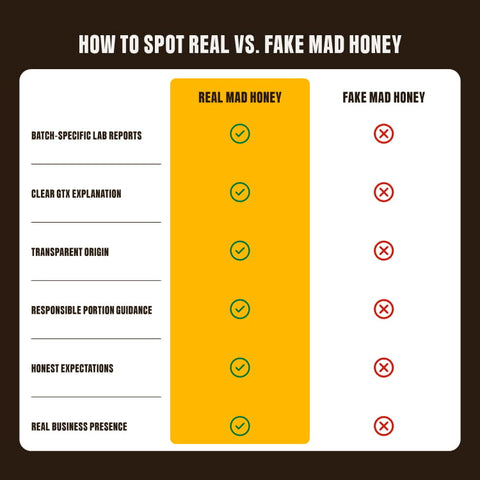
- Today: Every batch of Real Mad Honey is tested by an independent laboratory for its grayanotoxin content.
Mad honey has a long history in two very different landscapes: the cliffs of the Himalayan foothills in Nepal and the green, misty slopes along Turkey's Black Sea coast. In both places the honey comes from rhododendron nectar, and in both places it has been harvested in its own way for generations.
This article looks at those two traditions, how the honey from each region differs, and what has changed now that mad honey travels in labelled jars.
Where Mad Honey Comes From
Mad honey is made by bees that collect nectar from certain rhododendron species. That nectar contains naturally occurring grayanotoxins, which end up in the honey. Rhododendrons grow in many parts of the world, but only a few regions have them flowering in large enough numbers for bees to make honey mostly from their nectar. Nepal and the Black Sea coast of Turkey are the best known. Where our mad honey comes from covers both.
The Honey Hunters of Nepal
In the Himalayan foothills, mad honey comes from wild colonies of the Himalayan giant honey bee (Apis laboriosa), which builds its combs on steep cliff faces. Honey hunters reach them with handmade rope ladders and long bamboo poles, using smoke to move the bees away from the comb. The skills are passed down within families and villages, and a harvest has traditionally begun with prayers and offerings at the foot of the cliff before anyone climbs.
Nepal's honey hunters still harvest this way today, and our honey-hunting documentary shows what a cliff harvest looks like up close.
In these villages, the honey was never an everyday sweetener. It was set apart from ordinary honey and eaten in small amounts.
Deli Bal on Turkey's Black Sea Coast
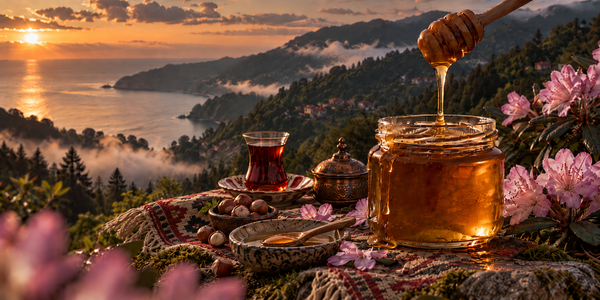
Along the Black Sea coast, in the hills around the Kaçkar Mountains, mad honey is known as deli bal. Here it comes from beekeepers rather than hunters. Families move their hives up to the rhododendron slopes while the flowers are in bloom and collect the honey at the end of the season. Many of them have kept bees on the same slopes for generations.
The honey of this coast also has one of the longest written histories of any food. The Greek writer Xenophon wrote about honey from this region in 401 BC, during the Greek army's march home along the coast. The history and culture of mad honey goes into more detail.
As in Nepal, deli bal was traditionally kept apart from ordinary honey and eaten in small amounts. Deli bal: Turkish mad honey explained covers the name and how it is made.
How Nepali and Turkish Mad Honey Differ
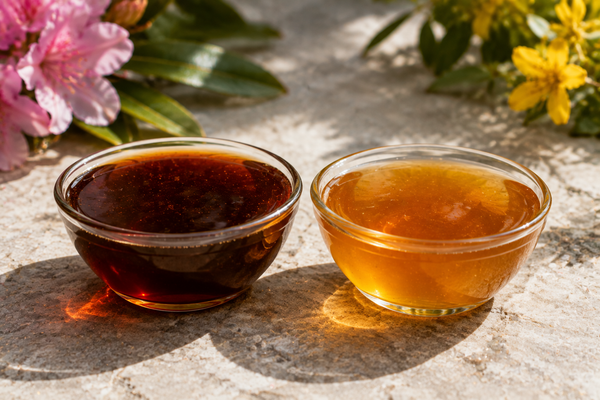
Nepali mad honey is typically darker, earthier and more bitter. Turkish mad honey is lighter in colour, smoother and less bitter. Colour and flavour also vary from harvest to harvest, because no two seasons, slopes or flowerings are the same.
For a side-by-side look, read Nepali vs Turkish mad honey and what mad honey tastes like.
What Has Changed: Testing Every Batch
For generations, the only way to judge a jar of mad honey was by its origin and its taste. The grayanotoxin content of mad honey varies from harvest to harvest, depending on the rhododendrons the bees worked, the altitude and the season. That's why every batch of Real Mad Honey is tested by an independent laboratory for its grayanotoxin content.
On our Lab Report page you can look up the report that applies to your order.
Label Information
Mad honey is sold as a food, with a clear limit: never more than 5 g a day – less than one level teaspoon, for adults only.
Eating more than 5 g a day can cause dizziness, nausea, cold sweats and low blood pressure. If that happens, stop, drink water and rest; if symptoms are severe, call 112 or see a doctor. Not recommended for children, during pregnancy or breastfeeding, for people with heart or blood pressure conditions, or if allergic to honey. Taking medication? Ask your doctor first.
Final Thoughts
From cliff harvests in Nepal to beekeepers' hives on the Black Sea coast, mad honey has been gathered with care for a very long time. The traditions differ, but in both regions the honey was set apart from ordinary honey and eaten in small amounts. Today a batch lab report adds what tradition could not: the measured grayanotoxin content of the honey you buy.